



.png)

How AI Is Changing Football Tactics Before the 2026 FIFA World Cup
Football has always been a game of space, timing, and small advantages. What is changing before the 2026 FIFA World Cup is the speed at which those advantages can be found. Artificial intelligence is no longer just benefitting clubs to collect data after matches,it is now helping coaches understand patterns faster, compare opponents in more detail, and build tactical plans from millions of data points. FIFA has even announced Football AI Pro, a generative AI assistant designed to give all 48 World Cup teams access to advanced pre-match and post-match analysis, a major sign that AI is transitioning from the lab to the core of elite football preparation.
The Strategic Importance of AI in Tournament Football
Tournament football is different from club football. Coaches have less time, fewer training sessions, and must prepare for opponents from very different football cultures. That is where AI becomes powerful. Instead of analysts spending hours tagging video manually, AI systems can now process tracking data, highlight repeating patterns, and turn raw footage into clear tactical insights. Research reviewed in 2025 found that AI is increasingly useful for real-time decision support, performance prediction, match management, and training design, which makes it especially valuable in a compressed World Cup environment.
Football AI Pro could narrow the gap between big and small teams
One of the biggest tactical stories ahead of 2026 is access. In the past, richer federations could afford better analysts, better software, and deeper opposition scouting. FIFA says Football AI Pro is meant to help level that gap by giving every qualified team the same analytical support before and after matches. The system is designed to work with text, video, graphs, and 3D visualisations, using millions of football data points per game. That matters because tactical planning is no longer only about knowing an opponent’s formation on paper. It is about understanding how that shape changes during build-up, pressing, transition, and set pieces.
Computer Vision is changing how coaches read shape and movement
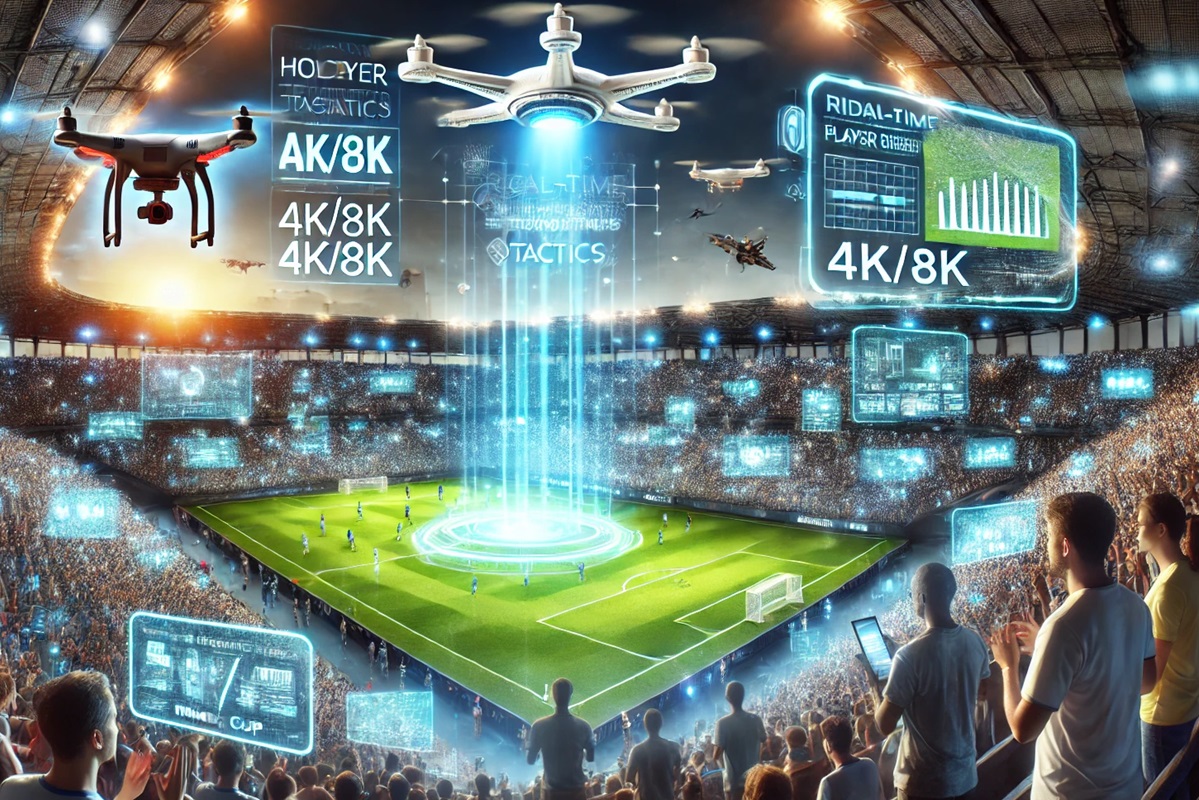
The old way of describing a team as a simple 4-3-3 or 3-5-2 is becoming less useful. Modern AI and computer vision tools can track every player and the ball many times per second, allowing coaches to study how shapes shift in real time. According to Barça Innovation Hub, these systems can identify pressing triggers, formation changes, spatial relationships, and even moments when an opponent suddenly behaves outside its usual pattern. In practical terms, that means a coach can prepare not just for a team’s starting shape, but for what happens when that team loses the ball, faces a high press, or defends deep late in a match.
Smarter opposition analysis means more targeted tactical plans
AI is also making opposition scouting more precise. Hudl notes that video and data analysis can reveal whether a team defends too narrowly, leaves space on the flanks, struggles with specific corner deliveries, or uses certain build-up patterns under pressure. That kind of detail changes tactics. A coach may decide to overload wide areas, switch play faster, or target a back-post zone from set pieces because the data shows a repeat weakness. Instead of building a game plan from instinct alone, teams can now build one from recurring evidence.
Better player data will influence pressing, substitutions, and role selection
AI is not only about the opponent. It is also changing how teams use their own players. Tracking systems can measure speed profiles, accelerations, decelerations, and high-intensity runs, while AI models help interpret fatigue and role suitability. That can affect tactical choices in real ways: when to press high, when to drop into a mid-block, which winger can repeat long sprints, or which defender can handle building from the back under pressure. In tournament football, where recovery time is limited, these marginal decisions can shape entire knockout matches.
FIFA’s tournament technology will also shape tactical behavior
For the 2025 Club World Cup, FIFA introduced an advanced semi-automated offside system using multiple cameras, a sensor in the ball, and AI to track players and deliver real-time alerts for clear offsides. FIFA has also announced AI-enabled 3D player avatars for the 2026 World Cup to improve player identification and tracking. The tactical effect is simple: teams know their runs, defensive lines, and timing will be monitored with even greater precision. That could encourage more disciplined line control, sharper movement, and fewer gambles on marginal offside positions
AI will assist coaches, not replace them
Academic reviews warn that football still faces issues around data quality, standardisation, privacy, and algorithmic bias. Even experimental tools like TacticalGPT suggest that AI can be helpful in simplifying tactical information and speeding up decision support, but it still struggles with some spatial “where” questions that are central to football tactics. In other words, AI is becoming an excellent assistant, not a perfect manager. The best teams before 2026 will likely be the ones that combine machine intelligence with human reading of momentum, psychology, and match context.
Cover Credit Panamerican world

Leave a Reply