



.png)
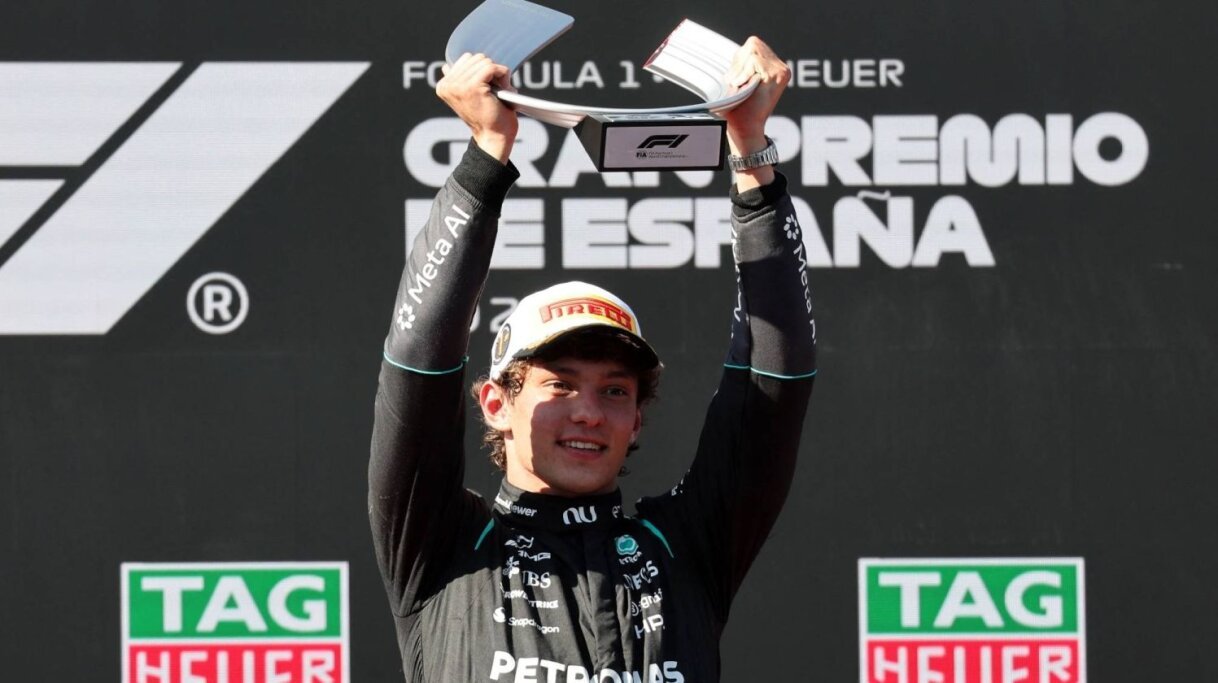
Kimi Antonelli Wins Madrid: How the VSC Changed the 2026 Spanish GP
Kimi Antonelli became the first Formula 1 winner at Madrid’s new Madring circuit after a dramatic strategic twist changed the direction of the 2026 Spanish Grand Prix. The Mercedes driver converted a crucial Virtual Safety Car (VSC) period into victory, while polesitter Lando Norris saw a race that had appeared to be firmly under his control slip away. Max Verstappen finished second, with Norris recovering to third after the disrupted pit-stop sequence. For Antonelli, it was another major result in an increasingly impressive 2026 campaign. For Norris, it was a frustrating reminder that in Formula 1, a race can change within seconds.
Norris Starts the Spanish GP in Control
Lando Norris arrived in Madrid with plenty of momentum and secured pole position for the inaugural Spanish Grand Prix at the Madring. He made a strong start and successfully defended his position from Antonelli, who lined up alongside him on the front row. Verstappen started third and remained close enough to keep the leaders under pressure. Norris gradually established control at the front. By the early stages of the race, he had built a significant advantage over Antonelli, with reports putting the gap at more than six seconds. At that point, a Norris victory looked increasingly possible. However, Formula 1 rarely follows a straightforward script. The decisive moment arrived when Lance Stroll's Aston Martin stopped in a position that required the Virtual Safety Car to be deployed. The timing could hardly have been more important.
The VSC That Changed Everything
The Virtual Safety Car was introduced on Lap 15 after Stroll's incident. The timing caught Norris at an unfortunate point on the circuit. Norris had just passed the pit-lane entry when the VSC was activated. Behind him, Antonelli and Verstappen were able to enter the pits while the reduced-speed conditions were still in effect. Norris, meanwhile, had to complete another lap before making his own stop. That difference proved crucial. Under a VSC, drivers must slow down significantly, reducing the time lost during a pit stop compared with a normal racing lap. Antonelli and Verstappen were therefore able to make their stops at a much smaller cost than Norris. When Norris eventually entered the pits, the VSC period had ended. His stop also took around seven seconds, adding further time to his disadvantage. The result was a major change in the running order. Norris, who had started from pole and led comfortably, emerged from the sequence down in fifth. Antonelli had effectively transformed a sizeable deficit into a winning position.
How Antonelli Took Advantage of the Opportunity
Antonelli still had to complete the job after the VSC, but Mercedes had placed him in an excellent position. Charles Leclerc had stayed out on track and temporarily inherited the lead. Ferrari opted to keep Leclerc on his hard tyres, hoping that another Safety Car or a late-race opportunity could change the strategic picture. Antonelli, meanwhile, had fresher tyres and clear air ahead of him. He eventually moved into the lead once Leclerc made his late pit stop. From there, Antonelli concentrated on controlling the race rather than taking unnecessary risks. Max Verstappen followed him across the finish line, while Norris gradually worked his way back towards the front. Norris eventually caught Verstappen in the closing stages, but the Madring circuit offered few opportunities to complete an overtake. Antonelli crossed the finish line 4.351 seconds ahead of Verstappen, with Norris only 0.738 seconds further back.
Why the Madring Circuit Made Norris' Recovery Difficult
The VSC was not the only factor that shaped the Spanish Grand Prix. The design of the new Madring circuit also became a major talking point after the race. Although the track created an exciting challenge during qualifying, overtaking during the Grand Prix proved difficult. Norris was able to close the gap to Verstappen near the end, but getting alongside the Red Bull was another matter. On the penultimate lap, Norris attempted to challenge Verstappen after the Red Bull driver encountered traffic and went through the Turn 5 chicane. Norris drew alongside but could not complete the move. The limited overtaking opportunities meant that Norris had little chance to recover all the positions he had lost during the VSC sequence. This made the early strategic incident even more significant. Had the circuit offered more overtaking opportunities, Norris might have had a greater chance of fighting his way back to victory.
Norris Questions the VSC Rules
Norris was understandably frustrated after the race, particularly because the incident was largely determined by the timing of the VSC rather than a mistake at the wheel. He later called for changes to the VSC procedure, arguing that drivers should have a fairer opportunity to make pit stops when a neutralisation is introduced. One possible solution discussed was temporarily preventing drivers from entering the pit lane immediately after a VSC is activated, or creating a system that gives all competitors a more equal opportunity to pit. The issue is bigger than Norris' individual result. A VSC is designed to slow the field when officials need to deal with an incident without deploying a full Safety Car. However, because drivers can gain or lose significant amounts of time depending on where they are when the VSC begins and ends, timing can have a major strategic effect. The Spanish Grand Prix provided a particularly clear example.
Antonelli's Eighth Win of 2026
Whatever role luck and timing played in Madrid, Antonelli still had to execute the race effectively. The victory was his eighth Grand Prix win of the 2026 season and further strengthened his position at the top of the Drivers' Championship. The Italian driver now has a substantial points advantage over Mercedes teammate George Russell. Antonelli's consistency has become one of the defining stories of the 2026 season. His Madrid victory also demonstrated another important quality: the ability to take advantage when circumstances change. The race did not simply fall into his hands. Mercedes reacted quickly to the VSC, Antonelli completed the pit stop successfully and then managed the remaining laps without allowing Verstappen to mount a serious challenge.
Verstappen Secures Second as Red Bull Maximises Its Opportunity
Max Verstappen also benefited from the VSC sequence. The Red Bull driver was able to pit during the neutralisation and emerged in a strong position. He remained close enough to Antonelli to keep the Mercedes under pressure for much of the race. Verstappen ultimately finished second, 4.351 seconds behind the winner. His result also meant Norris had to settle for third despite starting from pole and leading the race comfortably in its opening stages. Charles Leclerc finished fourth for Ferrari, followed by George Russell in fifth. Liam Lawson, Franco Colapinto, Oscar Piastri, Arvid Lindblad and Nico Hülkenberg completed the top ten.
What the Spanish GP Means for the Championship
The Madrid result was significant for the 2026 championship. Antonelli collected 25 points for victory, while Verstappen scored 18 and Norris took 15. The result increased Antonelli's championship advantage, giving him an 81-point lead over his Mercedes teammate Russell after 14 rounds. For Norris, the situation was more complicated. He demonstrated strong pace throughout the weekend and converted that pace into pole position and an early race lead. However, the combination of the VSC timing, the pit stop and the difficulty of overtaking at the Madring prevented him from converting that performance into victory. That makes the Spanish GP an interesting example of how Formula 1 races are decided by much more than raw speed.
What Comes Next for F1?
The debate surrounding the VSC is unlikely to disappear immediately. The Spanish Grand Prix highlighted how a neutralisation can dramatically alter the strategic picture within seconds. Whether Formula 1 eventually changes the rules will depend on further discussion between the FIA, teams and drivers. The Madring circuit could also receive attention before its next race. For Antonelli, however, the focus will be much simpler: maintaining his championship momentum. His eighth victory of the season gives Mercedes another major result and further establishes Antonelli as a central figure in the 2026 title fight. For Norris, Madrid represents a missed opportunity rather than a lack of pace. He had pole position, a strong opening stint and a substantial lead, but the VSC changed the race at precisely the wrong moment. That is the unpredictable nature of Formula 1. Sometimes a Grand Prix is decided by overtaking, sometimes by tyre strategy, and sometimes by a few seconds of timing. In Madrid, those few seconds changed everything.
Cover Credits the Japan Times

Leave a Reply