



.png)
What is DRS in Formula 1?
For 15 seasons, DRS was at the heart of nearly every major overtaking moment in the sport. Some fans loved it — it kept races exciting and gave faster cars a fair shot at getting past slower ones. Others hated it — arguing it made passes feel cheap, artificial, and robbed the sport of genuine wheel-to-wheel combat.
Whether you were for it or against it, there's no denying DRS shaped modern Formula 1 in a massive way. And now that it's been retired and replaced by new systems like Overtake Mode and Active Aero for the 2026 season, understanding what DRS was — and why it mattered — feels more relevant than ever.
What is DRS in Formula 1
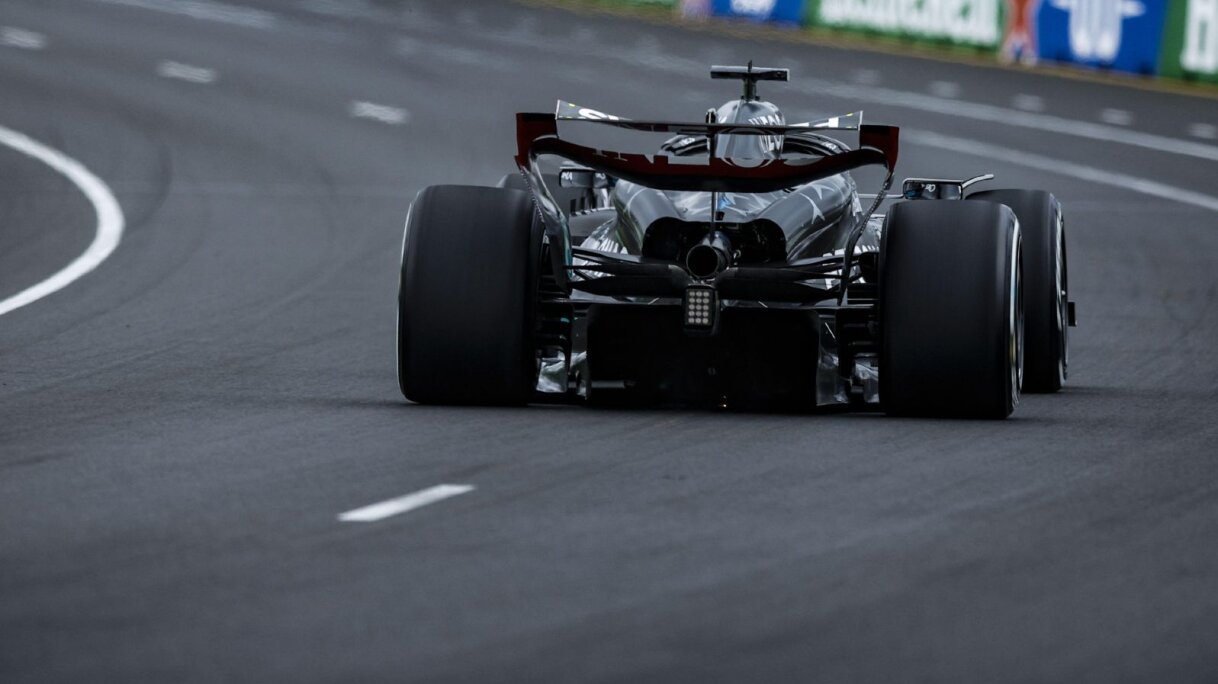
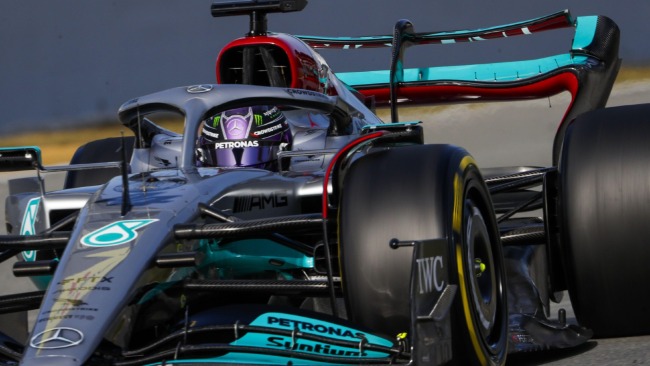
DRS, stands for Drag Reduction System, was a mechanical feature built into every F1 car from 2011 all the way through to the end of 2025. In the simplest terms possible, it was a flap on the rear wing that a driver could open at the push of a button to reduce air resistance and gain a speed boost on the straights. The whole point? To make overtaking easier in a sport where following another car closely had become almost impossible due to aerodynamic turbulence.
F1 cars generate massive downforce — the invisible force that pushes the car onto the track for insane cornering speeds. The rear wing is a huge part of that. But the trade-off is drag. The same wing that gives grip in corners acts like a parachute on straights.
DRS solved that temporarily. When the flap opened, air passed through the wing instead of pushing down on it, cutting drag and boosting top speed by roughly 10-12 km/h.
How Did It Work in a Race?
DRS wasn't a free-for-all. A driver could only activate it during a race if they were within one second of the car ahead at a designated detection point. Once cleared, the driver could hit the button on their steering wheel in a specific DRS zone — usually on the longest straight — and the rear wing flap would pop open. It snapped shut automatically when they hit the brakes.
During qualifying and practice, drivers could use DRS freely with no restrictions. Every circuit had at least one DRS zone, and most had two or three on the longest straights.
Why Was It Introduced?
DRS arrived in 2011 for a simple reason: overtaking had become painfully difficult. Modern F1 cars generate so much aerodynamic turbulence — "dirty air" — that following another car closely through corners was nearly impossible. The car behind would lose downforce, tyres would overheat, and even genuinely faster drivers would be stuck in frustrating queues.
Races were turning into processions. DRS was the FIA's answer — a controlled boost giving the chasing car enough of a speed advantage to pull alongside on the straight and attempt a pass.
The Controversy — Was It Too Artificial?
From day one, fans were divided — and stayed that way for 15 years.
Critics had a point. Sometimes DRS made overtaking feel way too easy. A car would sail past on the straight with zero resistance. No wheel-to-wheel battle, no drama. Drivers themselves called it a "Band-Aid" that masked the real problem.
But the other side was equally valid. Without DRS, faster cars would be trapped behind slower ones for entire stints. The system didn't guarantee overtakes — it just opened the door. The driver still had to be close enough, time it right, and nail the braking.
Jenson Button was the first driver to use DRS at the 2011 Australian Grand Prix. Kimi Antonelli was the last, at the 2025 Abu Dhabi Grand Prix — the final race before the new regulations kicked in.
So What Replaced DRS in 2026?
The 2026 regulations represent the biggest F1 overhaul in a generation, and DRS was one of the most notable casualties. In its place, several new systems put far more control in the driver's hands.
Overtake Mode is the headline replacement. Like DRS, it activates when a driver is within one second of the car ahead. But instead of opening a wing flap, it delivers an extra burst of electrical power from the battery. The clever part? Drivers can deploy it all at once for one big push or spread it across the lap in shorter bursts. Tactical, not automatic.
Active Aero is the other game-changer. Both front and rear wings now switch between "Corner Mode" for maximum downforce and "Straight Mode" for minimum drag. Any driver can use it on high-speed sections regardless of the gap ahead — making it a fundamental part of how these cars operate, not just an overtaking tool.
Boost Mode lets drivers manually deploy maximum combined power anywhere on track for attacking or defending. And Recharge — where energy is recovered under braking and through corners — makes energy management a visible and critical part of strategy.
Early 2026 results have been promising. Overtaking numbers spiked at the season-opening Australian Grand Prix, and the racing has looked closer than it has in years.
Cover Credit F1

Leave a Reply